
Architects and interior designers across the UAE face a persistent design challenge: delivering high-end aesthetic appeal without compromising long-term durability and hygiene. In high-traffic residential developments and commercial hospitality spaces, the choice of material for kitchen countertops dictates both the lifecycle costs and maintenance demands of the space.
While natural stone has historically held prestige in luxury fit-outs, the demanding UAE climate, coupled with rigorous hygiene protocols, has exposed its practical limitations. Today, specifying a modern countertop requires balancing seamless visual integration, non-porous performance, and effortless repairability.
When evaluating options for a premium countertop for kitchen applications, comparing the structural characteristics of acrylic solid surfaces with those of traditional natural stone reveals clear operational and design advantages.
Technical Comparison for Kitchen Countertops: Acrylic Solid Surface vs. Natural Stone
To select the ideal kitchen countertop, project managers and specifiers must look beyond surface aesthetics to understand material performance under stress, heat, and moisture exposure.
| Performance Metric | Acrylic Solid Surface | Natural Stone (Granite / Marble) |
| Porosity & Staining | 100% Non-porous; naturally bacteria-resistant. | Porous; requires periodic chemical sealing. |
| Joint & Seam Visibility | Inconspicuous, thermoformed seamless joints. | Visible grouted or epoxy seams. |
| Repairability | Sandable and repairable on-site without removal. | Prone to cracking and chipping; hard to repair. |
| Design Flexibility | Thermoformable into fluid, curved shapes. | Rigid, flat planes; limited to straight cuts. |
Porosity and Hygiene Management
Natural stones like marble and granite are inherently porous materials. Microscopic voids within the stone absorb liquids, oils, and organic matter, creating breeding grounds for bacteria if unsealed. In contrast, a solid acrylic countertop is engineered to be non-porous. Liquids cannot penetrate the material, preventing deep-seated bacterial growth and staining from harsh compounds, cooking liquids, or cleaning agents.
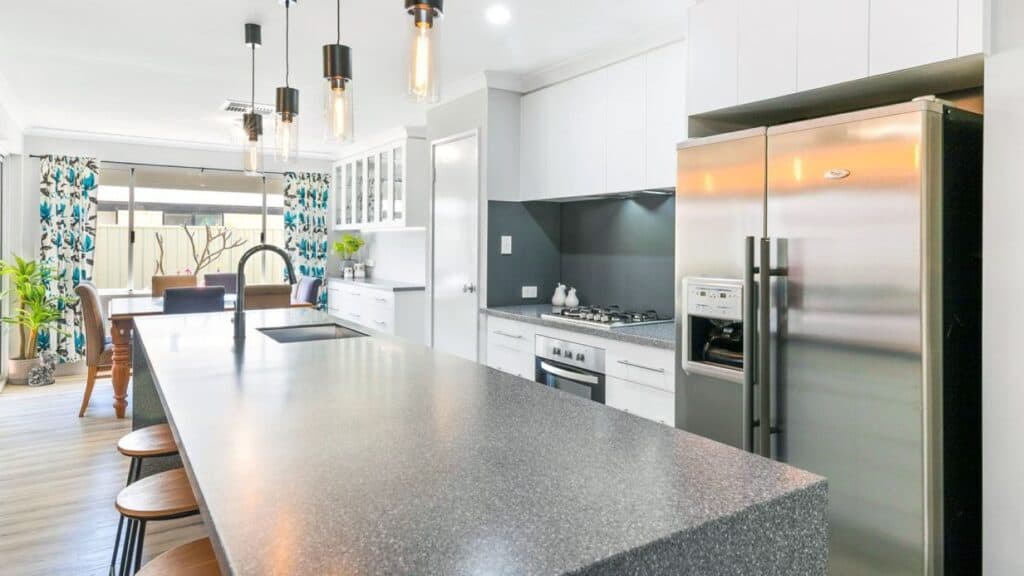
Seamless Inconspicuous Joining
One of the key technical drawbacks of natural stone in large-scale installations is the need for visible joints. These seams interrupt visual continuity and collect dirt and residue over time. Acrylic solid surface sheets are joined with colour-matched acrylic adhesives, then sanded seamlessly. The result is a continuous, uninterrupted countertop kitchen installation, regardless of overall length or configuration.
The Value Proposition: Long-Term ROI for GCC Fit-Outs
Specifying surface materials for commercial developments or high-end residential towers is an exercise in managing total cost of ownership. While natural stone carries significant initial prestige, its lifetime operational costs often surprise facility managers and developers.
Using acrylic solid surfaces delivers clear financial and logistical advantages across a project’s lifecycle:
- Elimination of Continuous Sealing: Natural stone requires periodic resealing with specialist chemicals to retain water and stain resistance. Acrylic surfaces never require sealants, saving significant maintenance hours and material expenses over a ten-year cycle.
- On-Site Thermal Shaping: Modern interior design schemes in the UAE increasingly favour fluid curves, integrated sinks, and waterfall edges. Acrylic solid surfaces can be thermoformed at precise temperatures, allowing complex fabrication without the high waste factors and tooling costs associated with CNC-milling solid stone blocks.
- Infinite Renewability: Accidental impacts in commercial environments often chip or crack natural stone, frequently requiring full panel replacement. An acrylic countertop can be buffed, sanded, and seamlessly repaired in-situ by certified installers, restoring the original factory finish without disrupting operations.
Industry Note: For UAE projects heading into the autumn renovation season, selecting materials with short lead times and easy on-site modification significantly reduces the risk of project delays.
Specifying the Right Surface for Your Next Project
Selecting the ideal kitchen countertop means looking beyond traditional trends and choosing a material that performs reliably in real-world conditions. Acrylic solid surfaces combine the tactile elegance required for luxury interiors with the structural integrity needed for demanding environments.
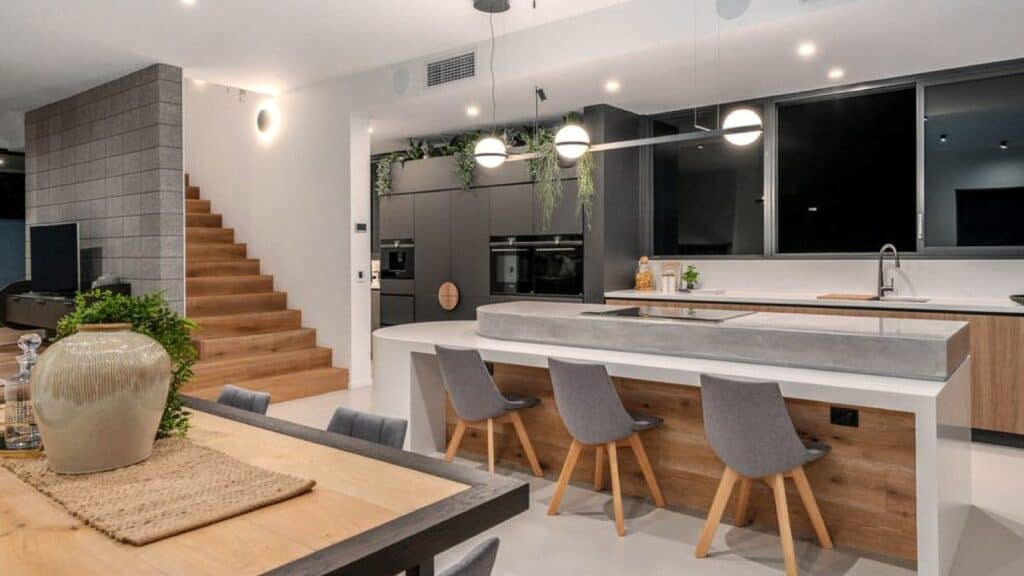
Whether you are designing a high-density residential community, a luxury hotel, or a commercial office space, specifying advanced surface technology ensures long-term client satisfaction and minimised maintenance overheads.
Ready to elevate your material specifications? Explore Salvocorp’s Premium Solid Surface Solutions to request material samples, download technical data sheets, or discuss your upcoming fit-out with our technical surface specialists today. You can also view full architectural specifications at Salvocorp UAE Surface Finishes.